🗂️PortSwigger Lab Writeup: 2FA Simple Bypass
🎯 Objective
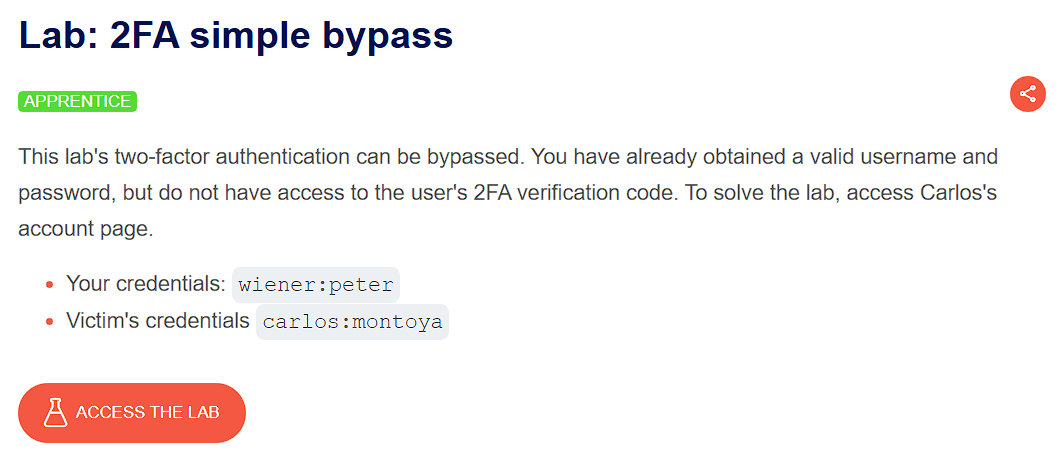
The objective of this lab is to exploit an multi-factor authentication weakness where the app incorrectly implements multi-factor authentication which can be bypassed just by changing the URL. The goal is to bypass the carlos and log in to the account.
- Lab URL:
https://portswigger.net/web-security/authentication/multi-factor/lab-2fa-simple-bypass - Category: Authentication
- Difficulty: Apprentice
🧪 Exploitation Steps
🕵️Step 1: Observe the Website
- Firstly open the lab URL in your browser, and observe what it is about and how it works.

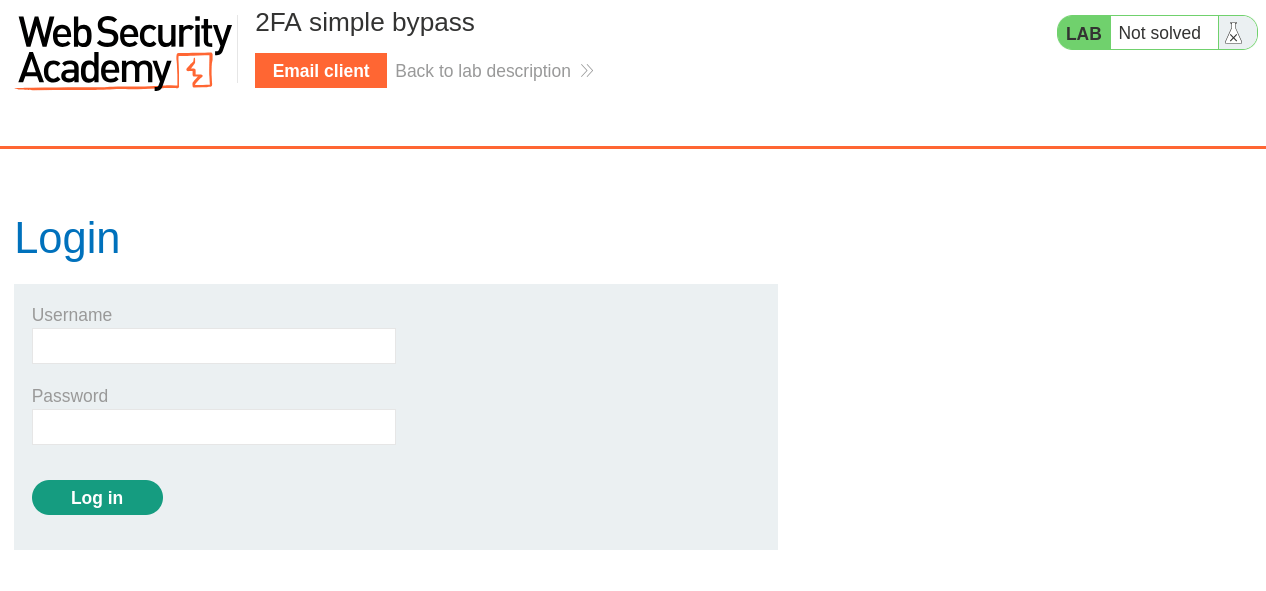
- At first glance, the website seems to be a blogging website with a login page. In the lab description, it is mentioned that we need to bruteforce the password of user -
carlosand log in to account.
📝Step 2: Log in as wiener
- Now we will first observe how multi-factor authentication works by logging in as
wienerfor which we have access to mails. - Enter the credentials
wiener:peterin login page and send the request.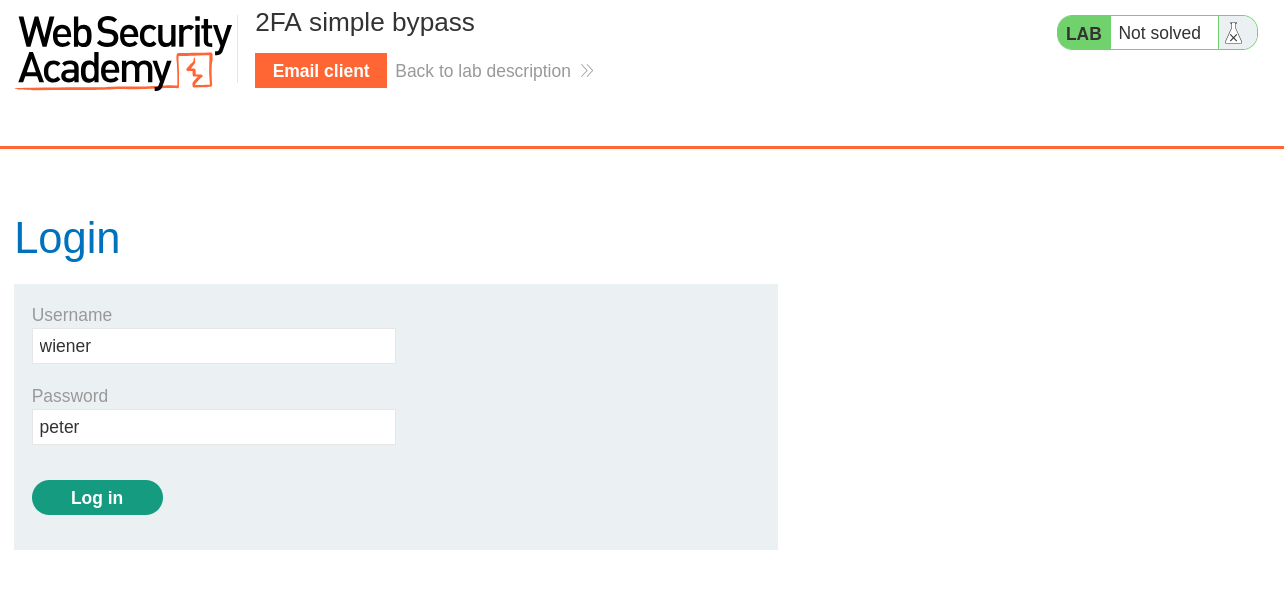
- Now, we are being redirected to
/login2page for entering OTP sent on mail. - Open the Email client, to access the
wienermails and retrieve the OTP.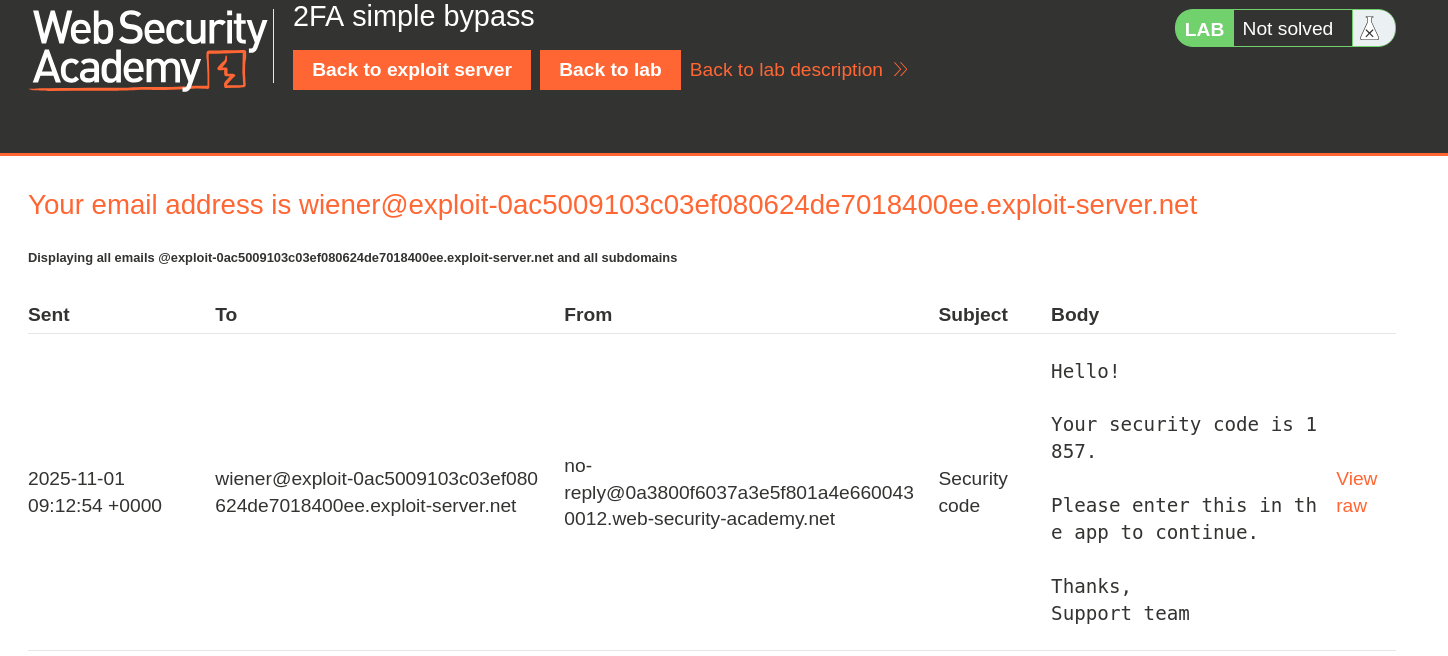
- Enter the
OTP - 1857on 2FA page to complete the login. - After login completion, we are redirected to the user account page -
/my-account?id=wiener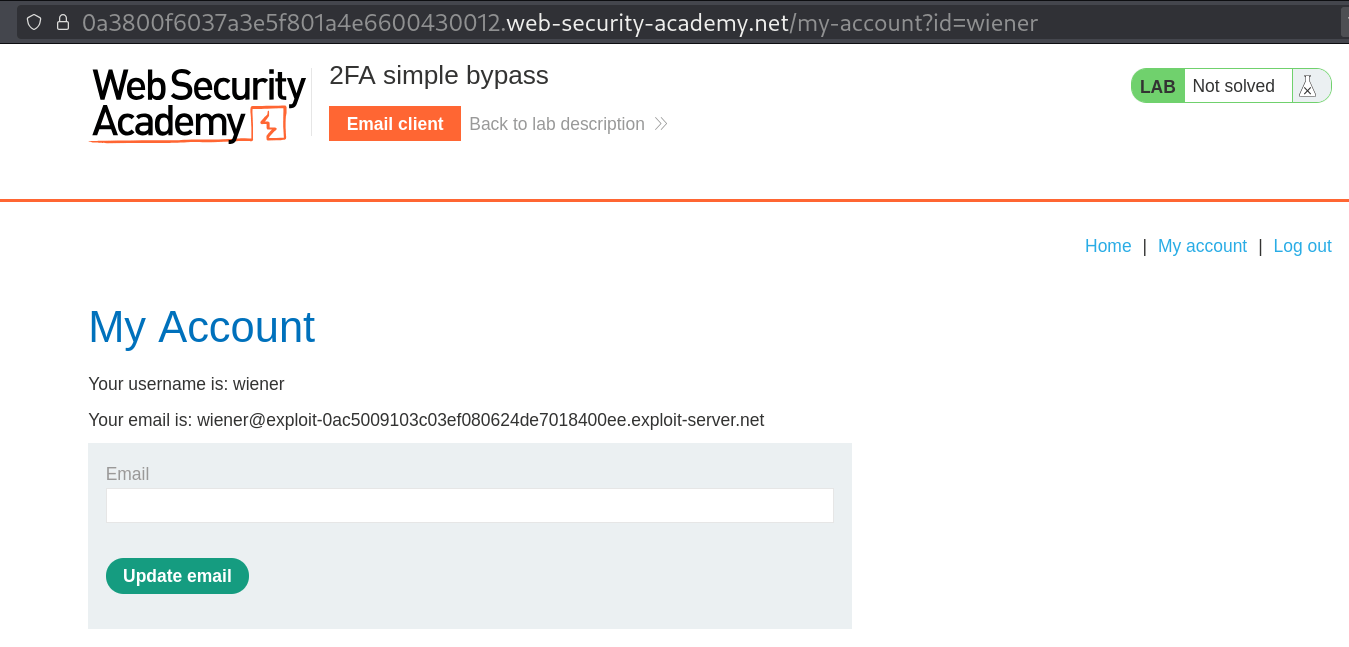
🧑💼Step 3: Log in as carlos
- Now, we will try to bypass 2FA by directly changing the URL to user account page after entering the password.
- Enter the credentials
carlos:montoyain login page and send the request.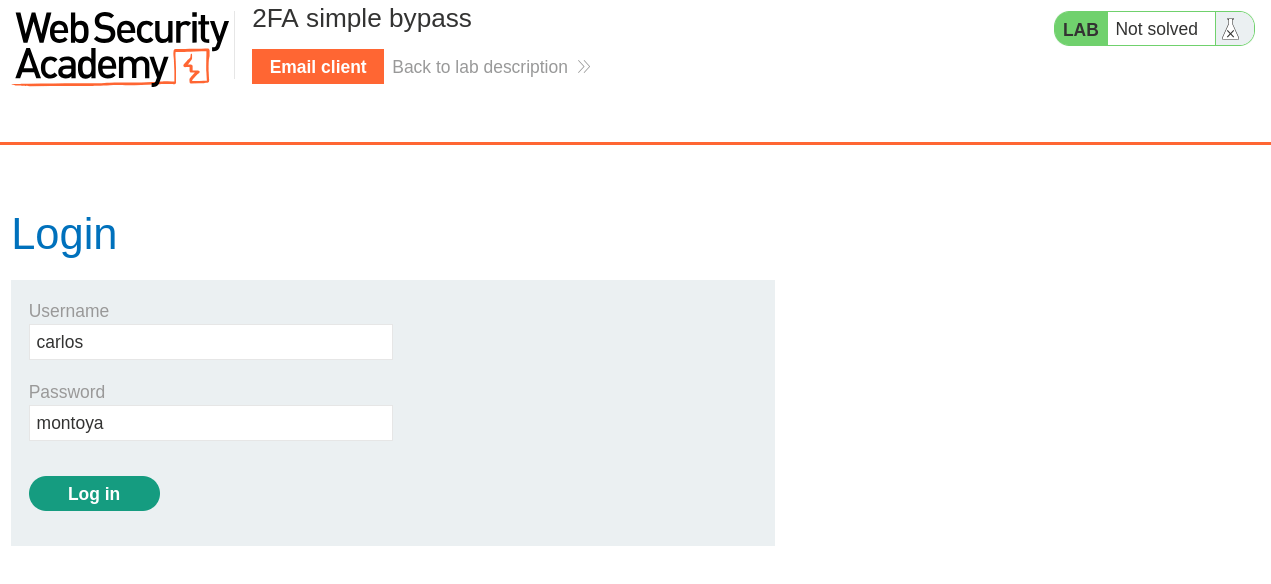
- Now change the URL from
/login2to/myaccount?id=carlos - Hence, we are now successfully being logged in as
carloswithout completing 2FA.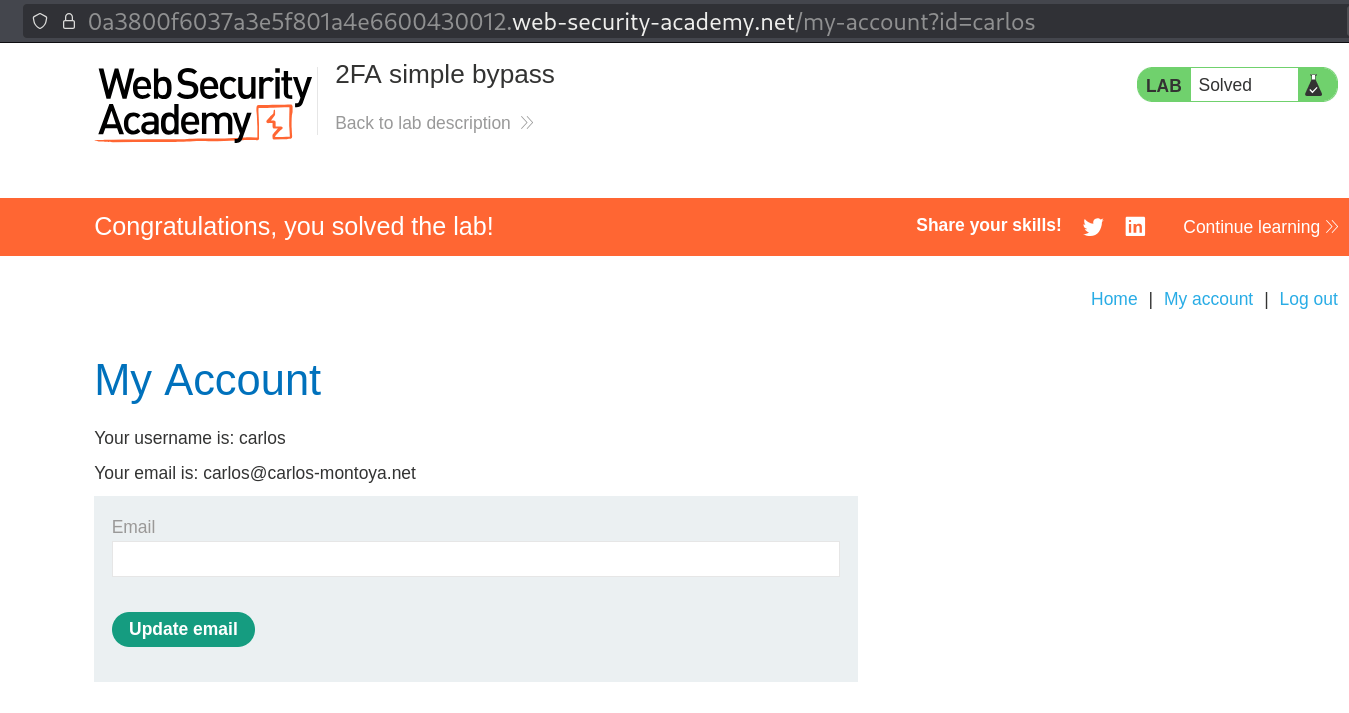
- And Finally, the Lab is solved.
🧠 Conclusion
- This lab demonstrates a 2FA enforcement flaw: the server does not require server-side verification of the OTP before allowing access to authenticated endpoints.
- Exploit: submit the password for
carlos, then navigate directly to/my-account?id=carlosto access the account without completing 2FA. - Fix: enforce 2FA server-side — issue and require a server-side session/auth token only after successful OTP verification, and deny access to protected endpoints until that token is present.